Why Market Research is the Foundation of Every Successful Cleaning Business
Cleaning business market research is the systematic process of gathering and analyzing data about your target customers, competitors, and industry trends to make informed business decisions. Here’s what effective market research covers:
Essential Components:
– Industry Analysis – Market size ($415.93 billion globally, $108.9 billion in US)
– Customer Demographics – Who needs your services and why
– Competitive Landscape – Local competitors, pricing, and service gaps
– Pricing Benchmarks – Industry rates and profit margins
– Growth Opportunities – Emerging trends like green cleaning and technology
The cleaning industry is booming with a 6.9% annual growth rate, but success isn’t guaranteed. As one industry expert puts it: “Research is so important – never guess anything when it comes to your business.”
Whether you’re launching a new cleaning company or expanding services, data-driven decisions separate thriving businesses from those that struggle to find consistent customers.
I’m Kimberly Adamof, and after scaling and selling my own successful cleaning company, I’ve helped hundreds of cleaning business owners use cleaning business market research to identify growth opportunities and build profitable marketing strategies.
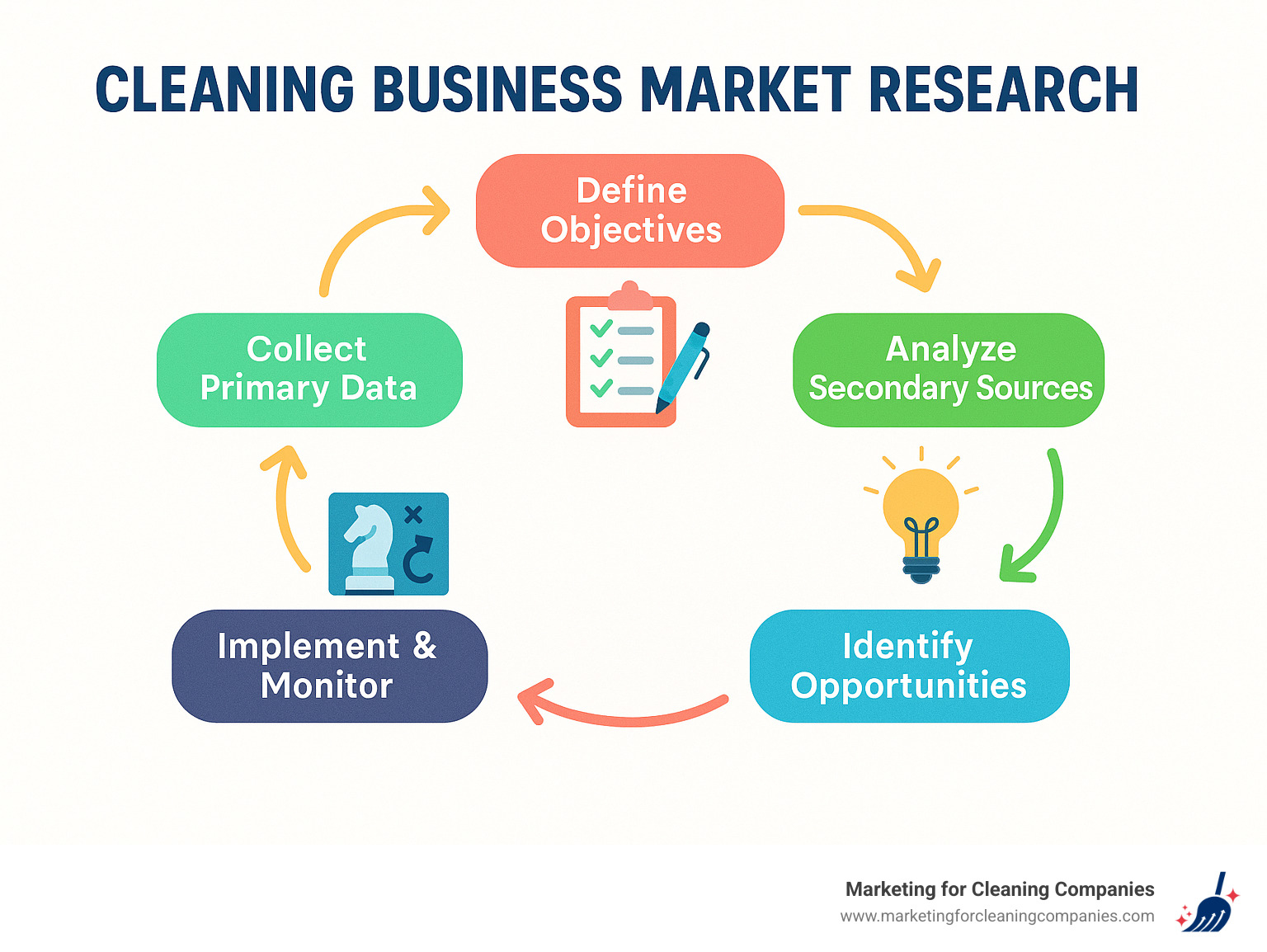
Cleaning business market research terms explained:
– cleaning business growth strategies
– cleaning company digital marketing
– cleaning service marketing plan
Cleaning Business Market Research Fundamentals
The cleaning industry represents a $415.93 billion global market growing to $616.98 billion by 2030. In the United States, we’re looking at a $108.9 billion market with over 1 million cleaning businesses and steady 3.5% compound annual growth.
Commercial cleaning dominates with 73.3% of market share, residential cleaning captures 14.3%, while government and nonprofit cleaning rounds out 12.4%. Understanding these segments helps identify the biggest opportunities in your local area.
What is Market Research?
Market research is like being a detective for your cleaning business – gathering evidence about potential customers and competitors to understand what makes them tick. Instead of guessing what people want, you’re finding out for sure.
For cleaning business owners, good research answers crucial questions: Who exactly needs my services? Where do these people live or work? What specific cleaning tasks do they struggle with most? How much will they actually pay?
Primary research means collecting brand-new information directly from your target market through surveys, interviews, or conversations. Secondary research uses existing information like industry reports and government data.
The magic happens when you combine both approaches to create detailed buyer personas – character profiles of your ideal customers that guide every business decision.
When Should You Conduct Cleaning Business Market Research?
Cleaning business market research isn’t a one-time activity. Smart business owners make it ongoing, especially during these crucial moments:
Before starting your business, research helps avoid expensive mistakes by validating demand and identifying ideal customers.
When expanding services – adding carpet cleaning, window washing, or specialized sanitization – research shows real demand and pricing potential.
Geographic expansion requires fresh research since each neighborhood has different income levels and cleaning preferences.
Market shifts happen frequently. The pandemic changed how people think about cleaning and disinfection. Regular research helps spot changes early.
When business struggles – declining bookings or new competitors – research reveals what’s happening and how to respond strategically.
Mapping the Market: Industry Size, Segments & 2025 Trends
The cleaning industry is changing in ways that create exciting opportunities for smart business owners. Floor care services capture 30.93% market share in 2024, while contract commercial cleaning represents 49.7% of global revenue – the recurring contracts that provide steady monthly income.
Residential cleaning is growing at 4.9% CAGR, driven by busy families and aging homeowners. The cleaning services software market is projected to hit $2.65 billion by 2028 with 10.3% annual growth, showing rapid technology adoption.
Scientific research on census data shows how demographic analysis helps identify high-opportunity areas for services.
Key Growth Segments for Cleaning Companies
Commercial cleaning maintains dominance with 27.51% of commercial demand. Hybrid work changed the game but didn’t kill demand – businesses need different schedules and specialized sanitization.
Specialized services command premium pricing. Carpet and upholstery cleaning is projected to grow at 8.4% CAGR from 2025 to 2030. Industry experts report turning “a $500 job into a $2,000 quote” through optional premium services.
Trends Shaping 2025 and Beyond
Green cleaning certification has become a customer expectation with 30% of U.S. states implementing green requirements in public buildings.
AI and IoT integration is happening now. Early adopters report 25% efficiency increases and improved customer satisfaction.
Subscription models provide predictable recurring revenue with higher customer lifetime value than one-time bookings.
Employee wellness focus addresses critical turnover rates hitting 200%. Companies investing in competitive benefits gain significant advantages.
Fieldwork Toolbox: Methods & Tools for Cleaning Business Market Research
Getting started with cleaning business market research doesn’t require expensive consultants. The best insights often come from simple, direct methods connecting you with real customers.
Customer surveys through SurveyMonkey provide structured feedback from existing customers about what’s working and what they wish you offered.
Facebook polls in local community groups are surprisingly effective. As one successful owner notes: “Polls usually have a good response as they are super easy for users to engage with.”
LinkedIn outreach connects you directly with business owners and facility managers for commercial opportunities.
Google Trends shows exactly what cleaning-related terms people search for, helping spot seasonal patterns and emerging demands.
SWOT analysis templates organize research into clear pictures of strengths, weaknesses, opportunities, and threats.
More info about Cleaning Business Marketing Ideas provides additional research and marketing strategies.
Primary Research Techniques for Local Insights
Door-to-door interviews provide unfiltered insights about neighborhood cleaning needs and spending willingness.
Online questionnaires work best when easy to find and complete. Keep surveys under 5 minutes to prevent abandonment.
Review mining involves reading competitor reviews on Google, Yelp, and Facebook for patterns in complaints that represent opportunities.
Secondary Data Sources to Boost Analysis
Trade associations like ISSA publish detailed industry reports revealing trends and salary benchmarks.
Bureau of Labor Statistics provides free employment trends and wage information. Median janitor wages were $16.84 per hour in May 2023.
IBISWorld shows the cleaning industry has 1 million businesses with steady growth patterns.
| Data Source | Cost | Best For |
|---|---|---|
| Census Data | Free | Demographics |
| BLS Reports | Free | Wages & Employment |
| Trade Associations | $50-500 | Industry Trends |
| IBISWorld | $1,000+ | Comprehensive Analysis |
Turning Data into Strategy: SWOT & Gap Analysis
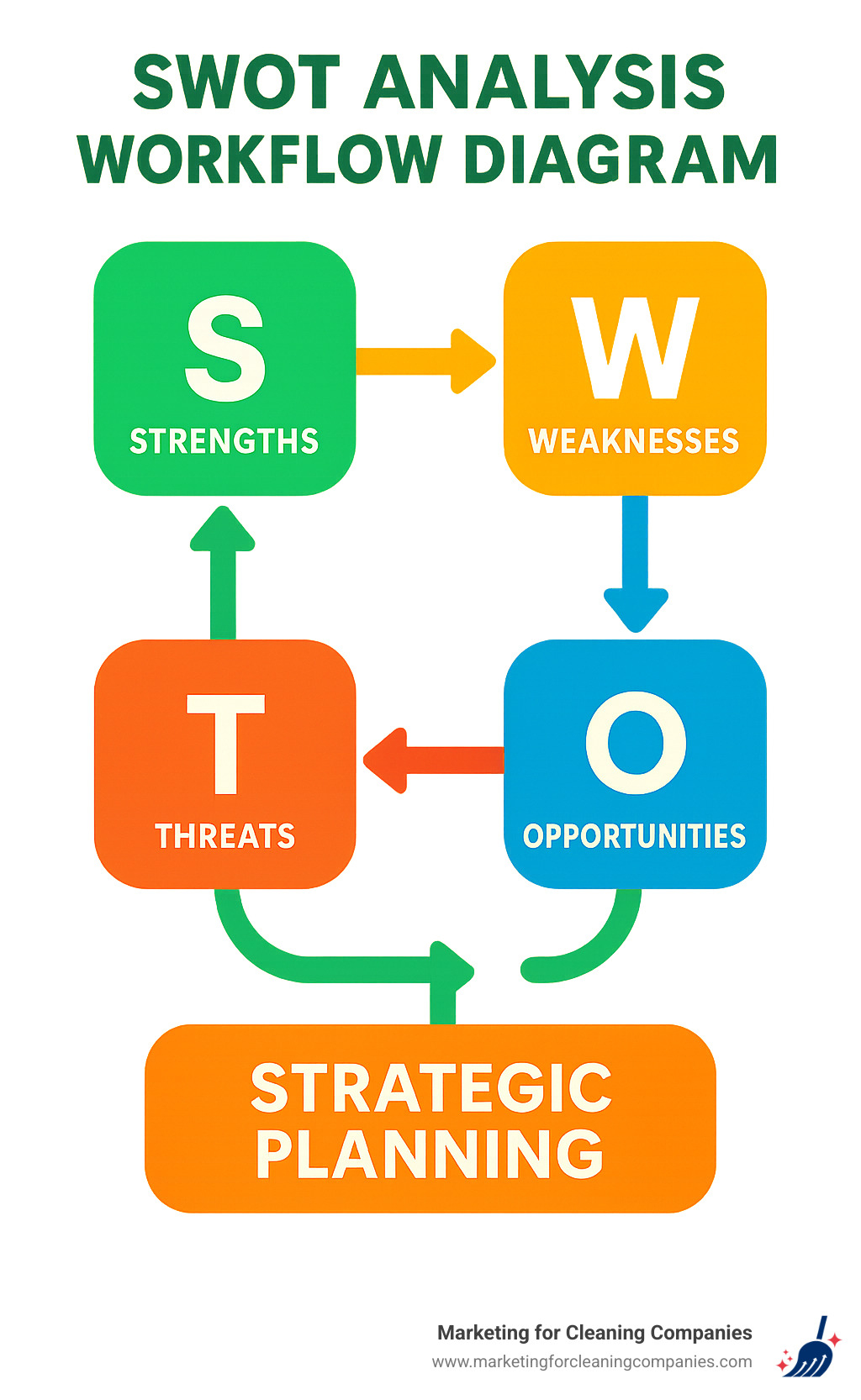
SWOT analysis transforms research insights into actionable strategies by identifying what your business does better than competitors, honest assessment of shortcomings, market gaps you could fill, and potential challenges to prepare for.
Competitor benchmarking means systematically comparing your services, pricing, and satisfaction against local competitors to understand differentiation opportunities.
Pricing, Financial Benchmarks & Legal Landscape
Getting pricing right can make or break your cleaning business. Cleaning business market research shows solid earning potential when you understand the financial landscape.
Average cleaning service providers generate $585,000 in gross revenue annually completing around 2,900 jobs per year. Starting costs range from $2,000 to $15,000 for small operations, with vehicles and working capital each accounting for about 22% of initial investment.
Janitors and building cleaners earn a median of $16.84 per hour, with ranges from $12.39 to $23.18 per hour.
Regulatory compliance involves OSHA standards for worker safety, EPA FIFRA regulations for chemical use, and proper insurance coverage. Staying compliant helps win customers who value professionalism.
Scientific research on OSHA standards breaks down compliance requirements.
Building Competitive Pricing Models
Cost-plus pricing calculates expenses plus desired profit margin, guaranteeing profitability but potentially leaving money on the table.
Value-based pricing focuses on service worth to customers rather than delivery costs. Busy executives often pay premium rates for reliable, thorough cleaning.
Tiered packages offer basic, standard, and premium service levels appealing to different budgets while boosting average sales.
Upselling additional services like interior cleaning or specialized sanitization can significantly increase job profitability.
Regulatory Checklist for Cleaning Businesses
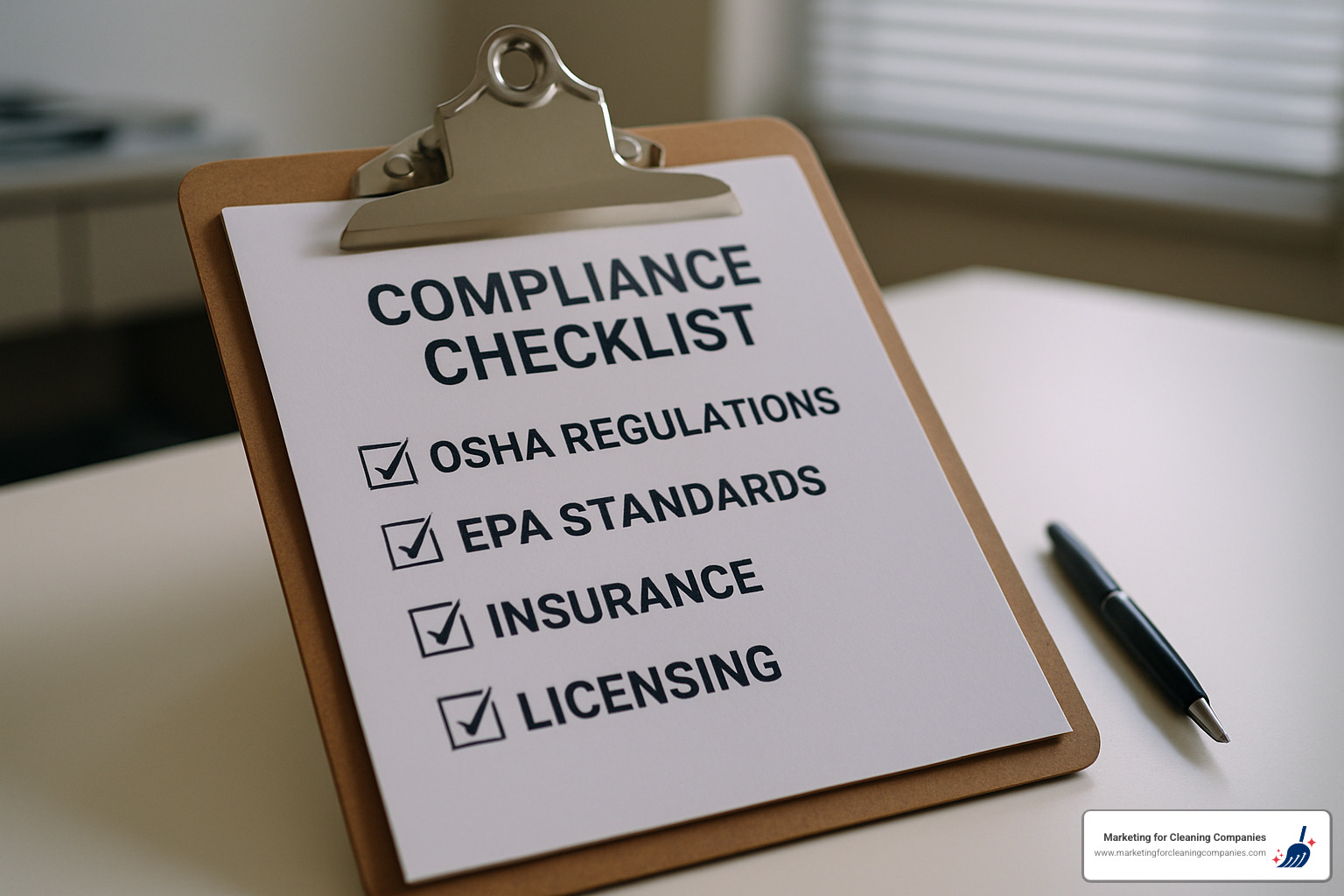
Chemical handling requires proper storage, safety data sheets, employee training, and protective equipment.
Worker safety compliance means OSHA standards knowledge, injury reporting procedures, and equipment safety protocols.
Business licensing includes general business licenses, specialized permits, contractor licensing, and tax registration.
Insurance coverage should include general liability, workers’ compensation, employee bonding, and equipment coverage.
Cleaning Business Market Research in Action
The most successful cleaning companies use research data to make smart decisions impacting their bottom line. Companies investing in quoting software with optional line items turn simple $500 cleaning jobs into $2,000 comprehensive service packages by understanding what additional services customers want.
Smart cleaning robots and IoT sensors help research-savvy businesses differentiate from competition by positioning technology as solutions to specific customer problems.
More info about SEO for Janitorial Services provides strategies for turning search insights into online visibility.
10-Step Market Research Roadmap
- Start with clear objectives – what specific questions need answers?
- Gather existing industry data about local demographics and market conditions
- Survey current and potential customers to understand real needs and preferences
- Map local competition systematically for service gaps and pricing patterns
- Estimate total market demand in your service area
- Test pricing strategies by getting customer feedback before committing
- Organize into SWOT analysis showing strengths, weaknesses, opportunities, threats
- Create actionable strategic plan based on learnings
- Implement suggested changes in services, marketing, or expansion
- Review and update regularly as markets change
Cleaning Business Market Research Success Metrics

Effective research shows results through improved business metrics:
Lead generation becomes more efficient targeting right customers with right messages.
Customer acquisition costs typically drop when you understand your market better.
Customer retention often improves dramatically using research insights. Industry leaders report 25% better retention rates from systematically collecting and acting on feedback.
Return on investment shows up through revenue increases from better pricing, cost reductions from efficient operations, and growth from entering right markets.
Successful cleaning business market research is ongoing – companies that consistently measure, learn, and adjust based on real data thrive while others struggle.
Frequently Asked Questions about Cleaning Business Market Research
What data points matter most when sizing a local market?
Demographic data should be your starting point. Look for household income levels above $50,000 annually and adults aged 35-65 who have both income and motivation to outsource cleaning.
Housing statistics show where demand exists. Focus on areas with higher property values and new construction activity.
Business density becomes crucial for commercial cleaning. Count office buildings, retail spaces, and medical facilities in your target area.
Competitor analysis helps understand market saturation. Five cleaning companies in a small suburb might signal oversaturation, while underserved areas with poor competitor reviews signal opportunity.
Economic indicators like unemployment rates and job growth predict demand stability.
How often should I update my market research?
Annual comprehensive reviews dig deep into industry trends, competitor analysis, and customer satisfaction surveys to spot major shifts.
Quarterly check-ins monitor competitor pricing, new service offerings, and economic changes affecting target customers.
Monthly monitoring focuses on customer feedback and online reviews. Set up Google Alerts and regularly check review sites.
Major market disruptions require immediate attention. Smart cleaning business owners quickly researched changing COVID-19 customer needs around disinfection and safety.
Which free tools can I use to research competitors effectively?
Google My Business provides competitor intelligence through photos showing equipment and services, plus customer reviews revealing what customers value and where competitors fall short.
Social media platforms show how competitors communicate, what services they highlight, and customer engagement levels.
Local directories like Yelp help understand competitive landscape and customer experiences.
Facebook groups in local communities provide unfiltered opinions about cleaning services and unmet needs.
LinkedIn becomes essential for commercial cleaning research to understand facility manager challenges.
Track information systematically over time in a simple spreadsheet monitoring competitor pricing, services, and customer feedback patterns.
Conclusion
The cleaning industry is booming, and cleaning business market research is your secret weapon for capturing your share of this $415.93 billion global market. Success isn’t just about riding the 6.9% annual growth wave – it’s about understanding exactly where your customers are, what they need, and how much they’ll pay.
The fundamentals matter most. Understand whether your local market favors residential cleaning (growing at 4.9% annually) or commercial contracts (dominating with 73.3% market share). Know your competition’s pricing, gaps, and customer complaints to find what they’re missing.
Your customers are talking – are you listening? Successful cleaning businesses don’t guess what customers want. They ask directly through surveys, Facebook polls, and conversations. They mine online reviews for insights about unmet needs.
Pricing without research is wishful thinking. Understanding your market’s willingness to pay and competitors’ rates lets you confidently charge what you’re worth and turn basic jobs into premium service packages.
Stay legal, stay profitable. Understanding OSHA and EPA guidelines positions you as the professional choice. Many customers pay more for cleaning companies following proper safety and environmental protocols.
Your next move: Pick one research method from this guide and try it this week. Survey five existing customers about additional services they’d want. Check three competitors’ Google reviews for common complaints. Calculate whether your pricing reflects true value.
The cleaning industry rewards businesses that understand their markets. Whether launching your first cleaning route or expanding into commercial contracts, cleaning business market research transforms guesswork into confident decisions.
Ready to turn research insights into marketing strategy that brings qualified leads? More info about Cleaning Service Marketing Plan to find how we help cleaning businesses grow with data-driven marketing that delivers real results.